
Gabrielle Calvocoressi
The New Economy
Copper Canyon (October, 2025)

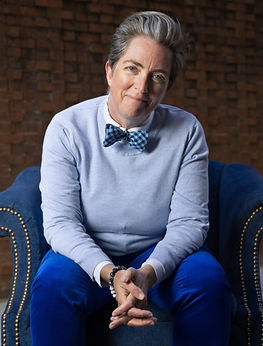
reviewed on February 18, 2026
Much of The New Economy is about self-interest. In this it resembles the old economy.
Whereas monopoly capitalism bases itself, however, at least hypothetically, on the premise that individual “greed” somehow produces a collective “good,” The New Economy acknowledges that self-interest entails at least a partial turning away from social and political ambitions. “I was supposed to think about my president,” Calvocoressi writes, “and all the wars all the bodies // all the tanks rolling into the cities […] What a terrible friend and citizen I was / that morning.”
As they diagnose, Calvocoressi fails in their public responsibilities, such as they are, because throughout The New Economy they prioritize their own pleasure—with sometimes literal navel-gazing—and celebrate at the same time a Ross Gay-like “gratitude” for their existence. At moments, Calvocoressi is as simple and as saccharine: “Light drips / from our stubbly chins.” Self-indulgence, though, is not merely “cataloged” in The New Economy but reflexively theorized. The collection’s insistence on self, that is, is not so much a product of our contemporary narcissism—or not only that—as it is an aesthetic and affective condition that Calvocoressi holds up and examines from multiple angles.
From one angle, self-regard opens onto a critique of well-meaning white liberalism. “I loved / the bully power some days,” Calvocoressi writes in “Homecoming Cistern Alien Vessel”:
Oh my pleasure
is not causing harm. My pride. I’m not like
so-and-so. My pink skin preaching, my pink skin
yawping out my other hole, ‘I did not choke
the man with my elbow!’ ‘Would never!’
‘I let all the boys in hoodies walk
through dark streets.’
From another angle, one’s own self-obsession registers as a reasonable and perhaps therapeutic response to illness and mortality, especially as experienced in a body coextensive with but not identical to one’s sense of self. “I look for hours / at men’s trousers and kimonos and bleed all day,” Calvocoressi writes, adumbrating a relationship to the body ambivalent at best.
Indeed, much of The New Economy evokes the zeal of the therapeutic patient, a kind of couéist affirmation which rises across the collection to formal principle. In a series of poems written during Lent, Calvocoressi theorizes the similarity of many of these poems as a “practice” or spiritual exercise. “I’m trying to do these little variations,” they write. “These small / poems that maybe could bloom out to something.” In its dailiness, blurring the line between the therapeutic and poetic—and in ways which lesser writers might botch—this series recalls other successful diaristic poetics, especially Martha Collins’s Day Unto Day and Suzanne Buffam’s A Pillow Book. The New Economy is long, but its subtle modifications in and developments of image and argument hold one’s attention in the way that musical “variations” often do. And the titles of these poems do suggest the iterative, obsessive variations of a band like The Mountain Goats: “Light Body Cistern Eyehole Pendulum Return,” “Jessye Norman Shun Lee Palace Variation,” “Hawk Song Cistern.”
So too does the image and idea of the cistern supply a formal heuristic in The New Economy. The book is filled with various containers and vessels, from actual cisterns to lakes, eyes, ears, rooms, and in several poems the “armpit of a Hammond B-3 organ.” As Calvocoressi develops it, the cistern is a space for the holding and echoing of pleasure, of joy, of abundance. “The trees and I open our mouths / together,” they write in “Affirmation Cistern When I Let Go of My Fear My Life Becomes Magical,” “and become a different / kind of vessel.”
Like Gay’s “catalog,” these sites of abundance constitute one form of Calvocoressi’s “new economy,” an economy which intersects and overlaps with—but which Calvocoressi attempts to distinguish from—regnant poetic and institutional economies. Calvocoressi wants to extract themself from what they call “the weaponized / gratitude of the Wantstagram feed” on which other poets have built their careers, but that extraction seems to me a dubious proposition:
Or were there plants of such fragrance:
thyme, oregano, yarrow, which
doesn’t smell but in the warmth of spring
blooming has a scent to it. I’m not
thinking of it like a poem or for
a poem. It’s not that kind of economy.
This is, of course, bad faith, and points to a larger issue in the book’s framing. One can certainly develop a more or less “therapeutic” poetics centered on the self, and on self-affirmation, but to insist that such a poetics exists independent of the material economies of po-biz represents not a “new economy” but a mystification of the economic realm itself. These poems are not self-soothing mantras—they were published by an elite press, short-listed for the National Book Award, and should earn Calvocoressi a significant raise in their tenure-track job at UNC-Chapel Hill, to say nothing of the other emoluments that await NBA finalists. Those plants are as much a part of "that kind of economy" as this review is.
Calvocoressi is too smart, and The New Economy too reflexively theorized, to have indulged this particular form of self-exemption. The oversight does not prohibitively compromise the book, but it does remind one that among the ways capitalist hegemonies maintain their power is by denying that they exist.