
John Liles
Bees, and After
Yale (March, 2025)

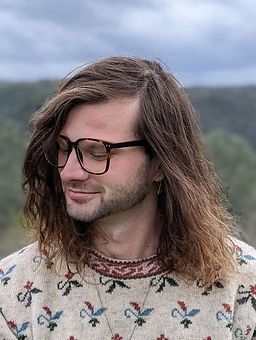
reviewed on September 17, 2025
Because it was the first and historically the most prestigious first-book prize, the Yale Series of Younger Poets possesses a reputation somewhat at odds with its checkered legacy.
From 1955 to 1965—probably the greatest run in the series’ history, spanning the judgeships of Auden and Dudley Fitts—winners included John Ashbery, James Wright, John Hollander, George Starbuck, Jack Gilbert, and Jean Valentine. Between 1985 and 1995, in contrast, judged by James Merrill and James Dickey, the only name I recognize is Brigit Pegeen Kelly. More recently, the ten years spanning the second half of Louise Glück’s and the first half of Carl Phillips’ judgeship launched the careers of Fady Joudah, Arda Collins, Katherine Larson, Eduardo Corral, Noah Warren, and Airea D. Matthews. Since 2017, however—and acknowledging that we may be too close for critical assessment—the most “successful” Yale poet in terms of reach and reputation has been Desiree C. Bailey, Phillips’ last pick.
It seems no longer the case, therefore, that the Yale Younger is the “best” first-book prize to win, career-making in the way it proved for such winners as Robert Hass and Richard Siken. Hardly the most lucrative, the Yale Younger has also been outflanked by prizes managed with more editorial intentionality, in particular by the partnership between Graywolf and the Academy of American Poets, by the establishment of Milkweed Editions, and by the meteoric rise of brilliant “indies” like Changes.
The current judge, Rae Armantrout, has as yet produced no superstars, but if John Liles’ Bees, and After is any indication that can be no commentary on the quality of her selections. The book is a magnificent debut from an unheralded poet whose most prestigious journal publication is a single poem in a 2017 issue of The Journal. In poems characterized by densely textured acoustics and careful attention to the natural world, Liles elaborates what seems to me a new ecopoetic ethics of encounter, in which reverent object-studies manage at the same to problematize their voyeur-like consumption of nature. In the poem “Nimbus crush,” for instance,” Liles describes the human presumption in bringing home a tide-pool mollusk:
and my
oh-lucky-stars
I go outloud
just brought you home
and look at you with those
flashbulbs
I say
before realizing it was your
skin
in the air
having ripped
its way
free
from your body
Linking his own aesthetics to other extractive practices, Liles arrives by the end of the book at an event- or encounter-based ecopoetics, an ethic of “lasting / and ephemeral / physical contacts,” as he evokes it, “manifesting specificity between // two charged forces : // to inhabit your nearnesses // (without doing harm).”
It would be easy given this subject matter—and with a title like Bees, and After—for Liles to slip into dead-deer preciosity, yet he never does.
Rather, the materiality of the language here gives these object-studies an almost abstract quality, as when Liles describes a “linchpin shell muscle / amending through pores / reamed in the outer edge / of the shell.” “The iridescence of the nacre,” he continues, “is a result of light broken / at depths, diffracted and collected.” One appreciates the same nature-based abstraction on Liles’ beautifully curated Instagram.
The price of such sonic texturing is momentary inscrutability, as eye-glazing in its jargon as a microbiology textbook: “shell growth necessitates an amassment / of calcium sourced first from sea-water, / but lacking proper salts the crab / calls to swoon his deader edges, / consumes the calcite slake.” To turn the screw tighter, however, there may be something wondrously inhuman—and ecologically ethical, perhaps, akin to Barthes’ “rustle of language”—in moments where Liles resists readability. Here is the entirety of the poem “Amnesic shellfish poisoning”:
off-hand allelopathy of an algal
metabolite: diatomaceous
toxin slag that shellfish assemble
through filter feeding
when consumed, becomes
symptomatic in the mammal:
calcite excitations that burn
neurons into dementing
involuntary limbics, temporal blows,
motor degenerates and the memories
sequelae bloom
Rarely resorting to the first-person, Bees, and After captures, as here, the grandeur and non-human alterity of the natural world, reminiscent in its sweep of the “Creation Sequence” in Terrence Malick’s Tree of Life. Such sublimity, as we might think of it, is perhaps most evident in the late poem “My knowing better,” reproduced here in full:
pre-satellitic the moon was
just material, sub terrain
and iron we untouched until
found aerolites landed
when the heart meets her
myocytes, she’s electric
comets come out of the dark
back home
every so often in the night
I look up
and hold out
Establishing a post-Romantic poetics for an era of ecological ruin, Bees, and After is an important and deeply impressive debut, one which I hope launches Liles’ career in the ways which the Yale Younger has done for so many—Rukeyser, Forché, Wojahn—of the nation’s most memorable writers.